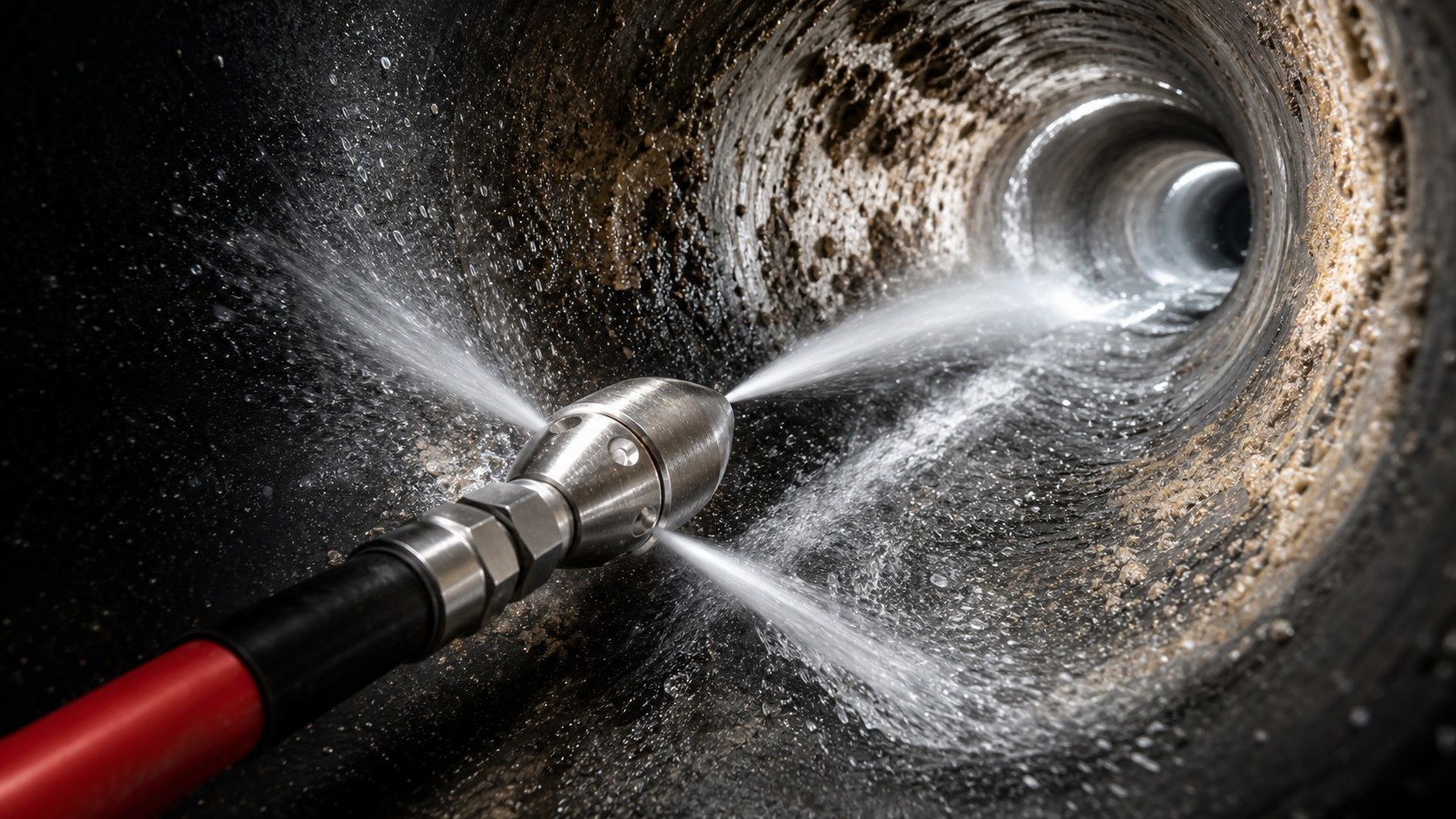
Cabling (snaking) punches a hole through a clog so water flows again, but the grease, roots, and scale lining the pipe are still there, and the clog comes back. Hydro jetting uses high-pressure water through a specialized nozzle to scour the entire pipe wall, restoring close to the original bore.
We camera the line before and after, so you can see the difference, not just take our word for it.
A hydro-jet nozzle scours the full pipe wall, cutting through grease and scale instead of just poking a hole in the clog.
Jetting vs. snaking
Snaking / cabling
Punches a hole through the clog
Leaves grease & scale on the walls
Clogs often return within months
Hydro jetting
Scours the full pipe wall clean
Removes grease, roots & mineral scale
Stays clear far longer
Where jetting shines
RestaurantsGrease-line buildup & health-code risk
MultifamilyShared mains & recurring backups
Root intrusionCuts fine roots before they reblock
MaintenanceScheduled jetting on a contract
How a jetting visit goes
1
Camera & assess
We scope the line to confirm jetting is the right call and find the buildup.
2
Jet the line
The right nozzle and pressure for the pipe, grease, roots, and scale flushed out.
3
Re-camera
We show you the clean pipe and flag anything that needs a closer look.
4
Plan ahead
For recurring problems, we'll set a maintenance cadence so it doesn't come back.
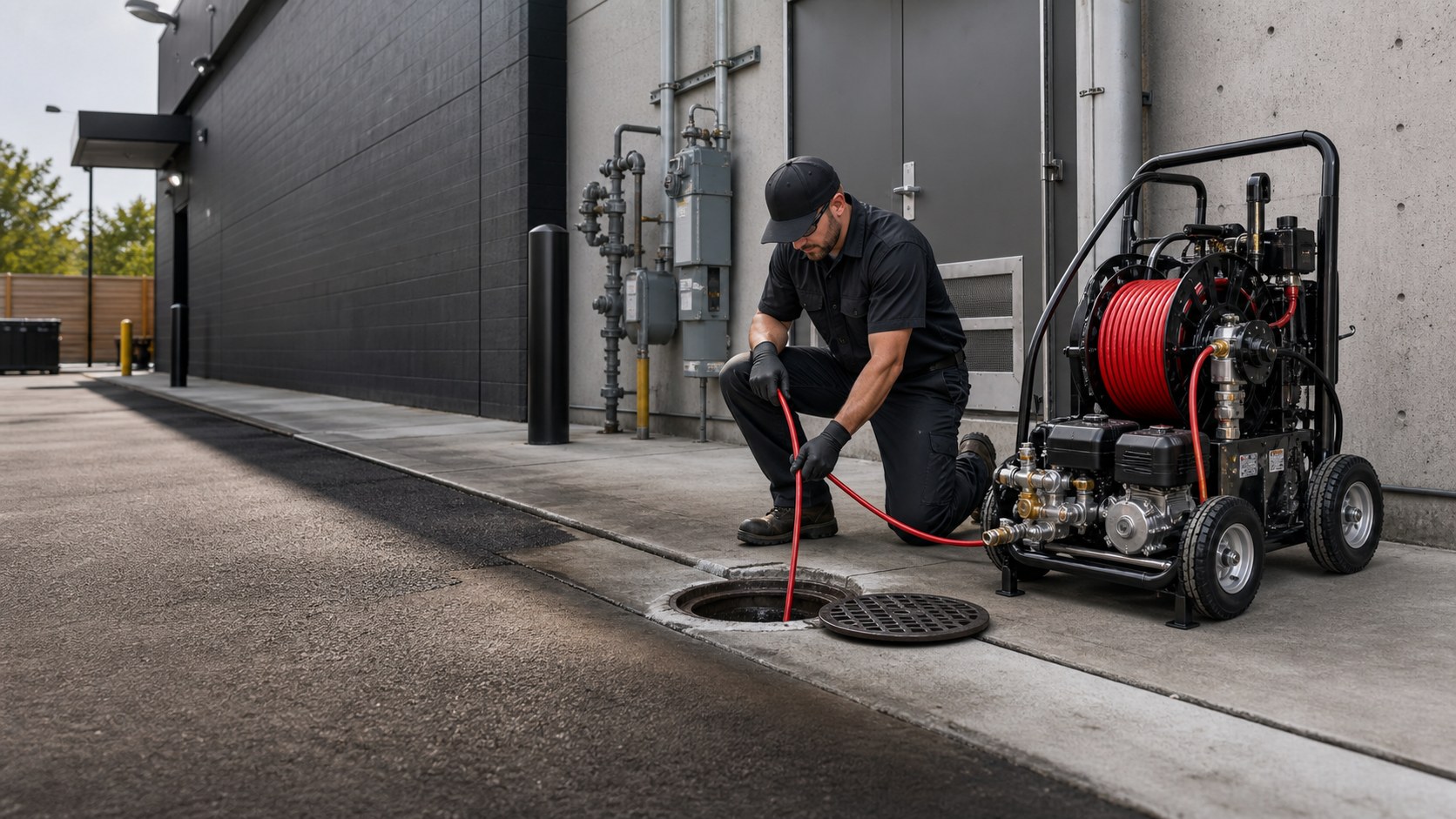
On-site with a truck-grade jetter, our crews clear commercial mains and cleanouts without disruption.
Common questions
For sound pipe, yes, we match pressure to the line. That's exactly why we camera first: if a pipe is fragile or failing, we'll tell you and recommend the right approach instead.
Standard cabling clears a path; jetting cleans the whole pipe wall. For grease, scale, or recurring backups, jetting lasts much longer.
Yes, for restaurants and property managers we set scheduled jetting (monthly, quarterly, or annually) to prevent emergency shutdowns. Ask us for a site walk.